• Residential pool damage repair starts with confirming water loss through a leak test, then locating the source with dye testing or electronic equipment before any structural work begins.
• Common damage points include skimmers, pool lights, plumbing lines, and cracked shells, each requiring a different repair method.
• Addressing damage early limits water loss, equipment strain, and higher repair costs later.
A damaged residential pool rarely announces itself clearly. Water levels drop, cracks appear along the deck, or chemical costs climb, and homeowners are left guessing whether the problem is evaporation or something more serious. Residential Pool Damage Repair typically begins with a basic water-loss confirmation, often a bucket test, followed by a more precise diagnostic process once a leak is suspected.
Pool damage in Phoenix, AZ tends to follow seasonal patterns tied to extreme heat and ground movement. Intense summer sun degrades pool surfaces and fittings over time, while shifting soil during monsoon season can stress underground plumbing and shell joints. Recognizing these pressures early helps homeowners decide when a repair is routine maintenance versus a sign of structural damage.
Identifying the Source of Pool Damage
Not every water loss issue is a leak. Evaporation, splash-out, and normal backwashing all reduce water levels without indicating damage.
• Wet spots in the yard or around pool decking that persist regardless of weather
• Cracks in the skimmer throat or separation between the skimmer and concrete
• Air bubbles in return jets, which often point to a suction-side plumbing issue
• A pool pump or autofill system running more frequently than usual
If any of these signs appear consistently, a professional diagnostic test is the next step rather than relying on guesswork.
Diagnostic Methods Used Before Repair
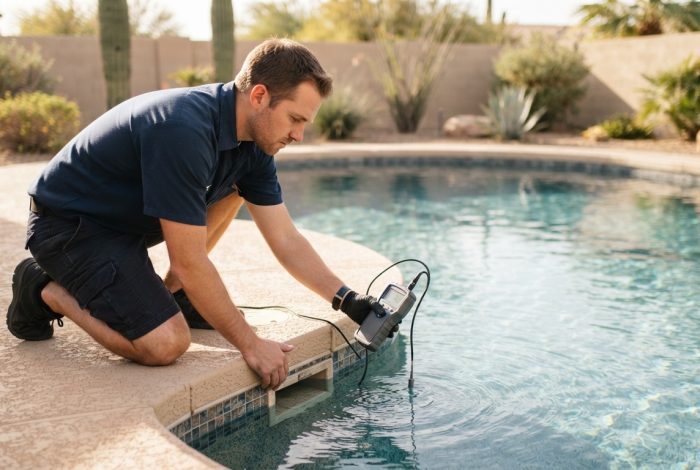
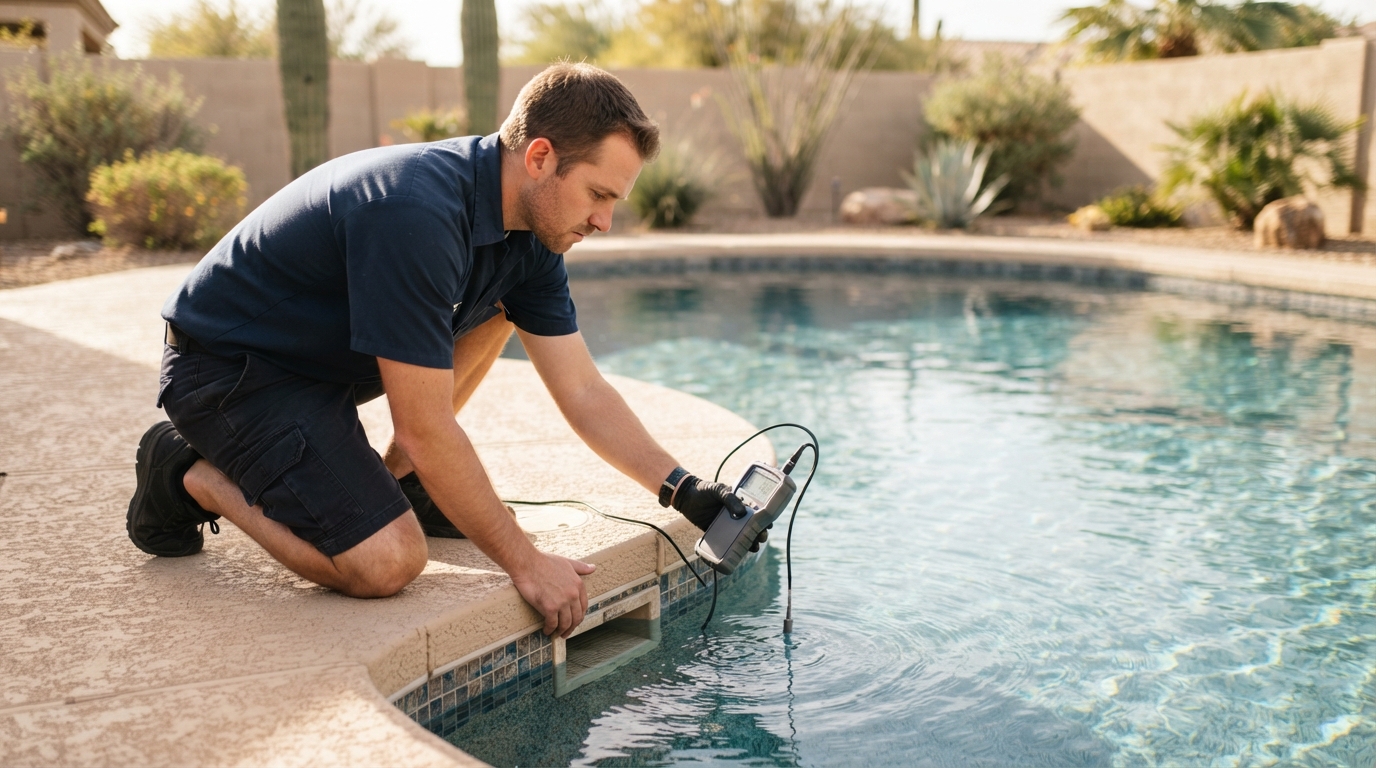
Confirming the exact location of damage prevents unnecessary digging or surface removal. Two methods are commonly used in the industry:
|
Method |
How It Works |
Best For |
|
Dye testing |
Dye is released near suspected cracks or fittings to see if it gets pulled into a leak |
Skimmers, lights, visible cracks |
|
Electronic/acoustic equipment |
Listening devices and pressure testing locate leaks without digging |
Underground plumbing, slab-adjacent leaks |
|
Property survey |
A preliminary check across yard, pool, and home to narrow down the affected zone |
Cases where the leak source is unclear |
Non-invasive techniques such as electronic listening devices and pressure testing are increasingly standard for locating leaks without breaking concrete, since they can pinpoint underground problems within a few inches, according to LeakLab AZ’s guide for Mesa pool owners. Confirming the leak point before repair work begins reduces the risk of cutting into an area that was not actually damaged.
Common Repair Types for Residential Pools
Repair work depends entirely on where the damage is located and what caused it. General categories include:
1. Plumbing repairs – addressing above-ground or underground pipe cracks and fitting failures
2. Skimmer and fitting repairs – resealing or replacing cracked skimmer throats and light niches
3. Shell and surface repairs – patching structural cracks in the pool’s surface material
4. Equipment-related fixes – correcting issues with autofill valves, pumps, or filtration connection
Each category requires different tools and expertise, which is why an accurate diagnosis matters before any repair begins.
Why Timing Matters for Pool Owners
Delaying repair on a confirmed leak tends to compound costs. Continued water loss can erode soil beneath the pool deck, strain pump motors that run longer to compensate, and increase chemical spending as water is replaced more often. Addressing damage once it is identified, rather than monitoring it indefinitely, generally keeps repair scope smaller and more predictable.
Based in Mesa, AZ, Pinpoint Pool Leak Detection In Phoenix extends its leak detection and repair work to pool owners throughout Phoenix, AZ. The company’s listed offerings include pool leak detection, slab leak detection, irrigation leak detection, and property leak surveys, performed by licensed, bonded, and insured technicians.
Frequently Asked Questions
How can I tell if my pool is actually leaking or just losing water to evaporation? A bucket test, comparing water loss inside a partially submerged bucket against the pool’s water level over 24 hours, helps separate normal evaporation from an actual leak.
Can a pool leak be repaired without draining the entire pool? In many cases, yes. Dye testing and underwater cameras allow technicians to locate and often repair leaks at skimmers, lights, or surface cracks without a full drain.
Does extreme heat in Phoenix, AZ make pool damage more likely? Prolonged sun exposure and high temperatures can accelerate wear on pool surfaces, seals, and equipment, making periodic inspection more useful in desert climates.
What happens if a leak is left unaddressed for too long? Water loss can worsen, structural cracks may expand, and surrounding equipment can experience added strain, which typically raises the eventual repair cost.
Next Steps for Pool Owners
Reviewing water levels and checking for visible cracks or wet spots remains a practical starting point before scheduling a professional diagnostic visit. Current service area information for Pinpoint Pool Leak Detection In Phoenix is published for homeowners researching repair options in the region.